
Winter Home Inspection Tips for Vermont: Roof Load, Ice Dams & Insulation.
Vermont winters are brutal. Heavy snow, freezing temperatures, and constant freeze-thaw cycles put extreme stress on homes. That is why knowing proper Winter Home Inspection tips for Vermont is essential for every homeowner and buyer. A standard inspection in July will miss problems that only appear when the temperature drops below freezing. Following specific winter home inspection tips for Vermont helps you identify hidden issues before they cause thousands in damage. From roof collapse risks to ice dam flooding, these home inspection tips could save your home and your savings.
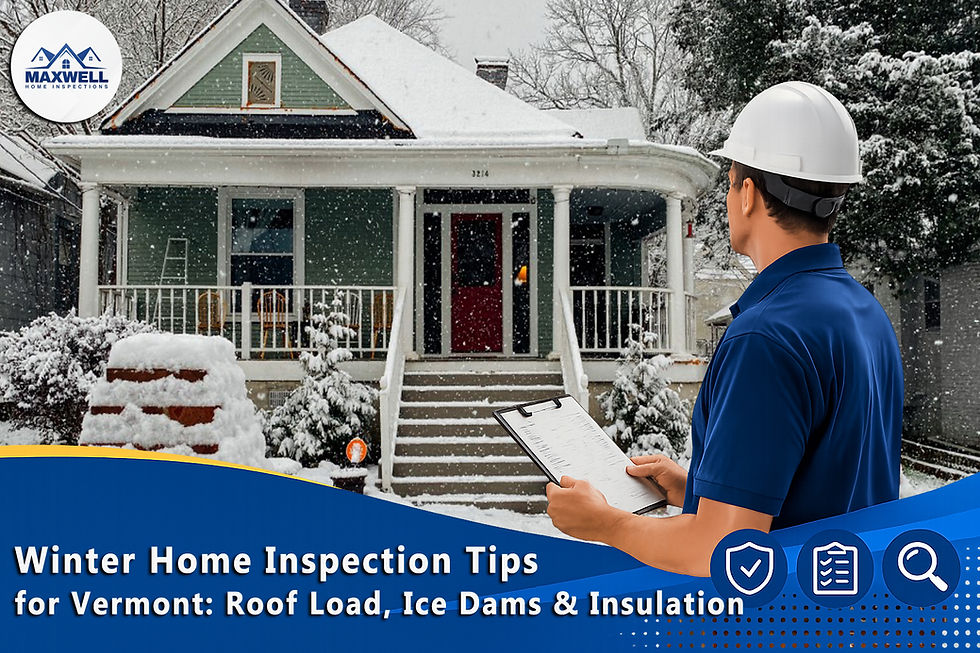
Checking Roof Load and Snow Accumulation Risks
First focuses on the roof. Vermont regularly gets snowfalls of two to three feet or more. The weight of wet snow can exceed 20 pounds per square foot. A flat or low slope roof is especially vulnerable. During your inspection, look for sagging ceiling joists, cracks around door frames on upper floors, or doors that suddenly stick. Another critical Winter Home Inspection tips for Vermont is checking the attic for proper ventilation. Poor ventilation allows ice dams to form at the roof edge. If you see large icicles hanging from gutters, that is a warning sign of heat escaping through the roof.
Identifying Ice Dams Before They Cause Leaks
Ice dams happen when warm attic air melts snow on the upper roof. The water runs down and refreezes at the cold eaves. Over time, water backs up under shingles and leaks into your walls and ceilings. One of the most practical part is to inspect your attic insulation depth. Vermont homes need at least 14 to 18 inches of blown insulation. Also check for air leaks around light fixtures, chimney penetrations, and attic access doors. A proper Winter Home Inspection tips for Vermont includes examining gutters and downspouts. Clogged gutters make ice dams worse. Heated cables installed in a zigzag pattern along roof edges can prevent dams from forming.
Insulation and Draft Proofing for Extreme Cold
Another essential winter home inspection tips for Vermont involves checking for drafts and heat loss. Walk around your home on a windy day with a candle or incense stick. If the smoke blows sideways near windows, doors, or electrical outlets, you have air leaks. Seal these with weather stripping, caulk, or spray foam. A complete Winter Home Inspection tips for Vermont also includes checking basement rim joists. These are often un-insulated and let in freezing air. Adding foam board insulation here makes a huge difference. Finally, inspect your heating system before October. Replace filters, clean ducts, and schedule a professional tune up for furnaces or boilers.
FAQ's For Winter Home Inspection tips for Vermont
FAQ 1: How much snow is too much for a Vermont roof?
Most Vermont roofs can safely hold 2 to 3 feet of fresh snow. Wet heavy snow is more dangerous than light powdery snow. If you have 18 inches of wet snow or 3 feet of light snow, consider removal. Watch for sagging ceilings, cracked drywall, or doors that suddenly stick – these signs mean your roof is stressed.
FAQ 2: How do I prevent ice dams on my Vermont home?
Prevent ice dams by keeping your attic cold. Seal air leaks from living spaces below. Add insulation to reach R49 or higher. Keep gutters clean before winter. Install attic ventilation so warm air escapes. After snowfalls, use a roof rake to clear the bottom 3 to 4 feet of roof edges.
FAQ 3: What insulation level is best for Vermont winters?
Vermont homes need attic insulation of R49 to R60, which is 14 to 20 inches of fiberglass or blown cellulose. Walls should have R20 to R25. Basement rim joists need R15 to R20. Crawl spaces should have insulated walls not floors. A home energy audit tells you exactly where to add more insulation for maximum savings.
FAQ 4: Can a winter home inspection find hidden problems?
Yes, winter inspections actually reveal problems summer inspections miss. You can find drafts, ice dams, poor insulation, furnace issues, and freezing pipes. However, inspectors cannot check air conditioners or see roof shingles under snow. The best approach is a winter inspection plus a follow up in spring for exterior items.
The Author Kevin Maxwell is the owner and operator of Maxwell Home Inspection Services, LLC. Kevin Maxwell is a certified Home Inspector in Albany, NY, who has performed over 6000 Inspections.
Phone: 1-800-598-4754


Comments